
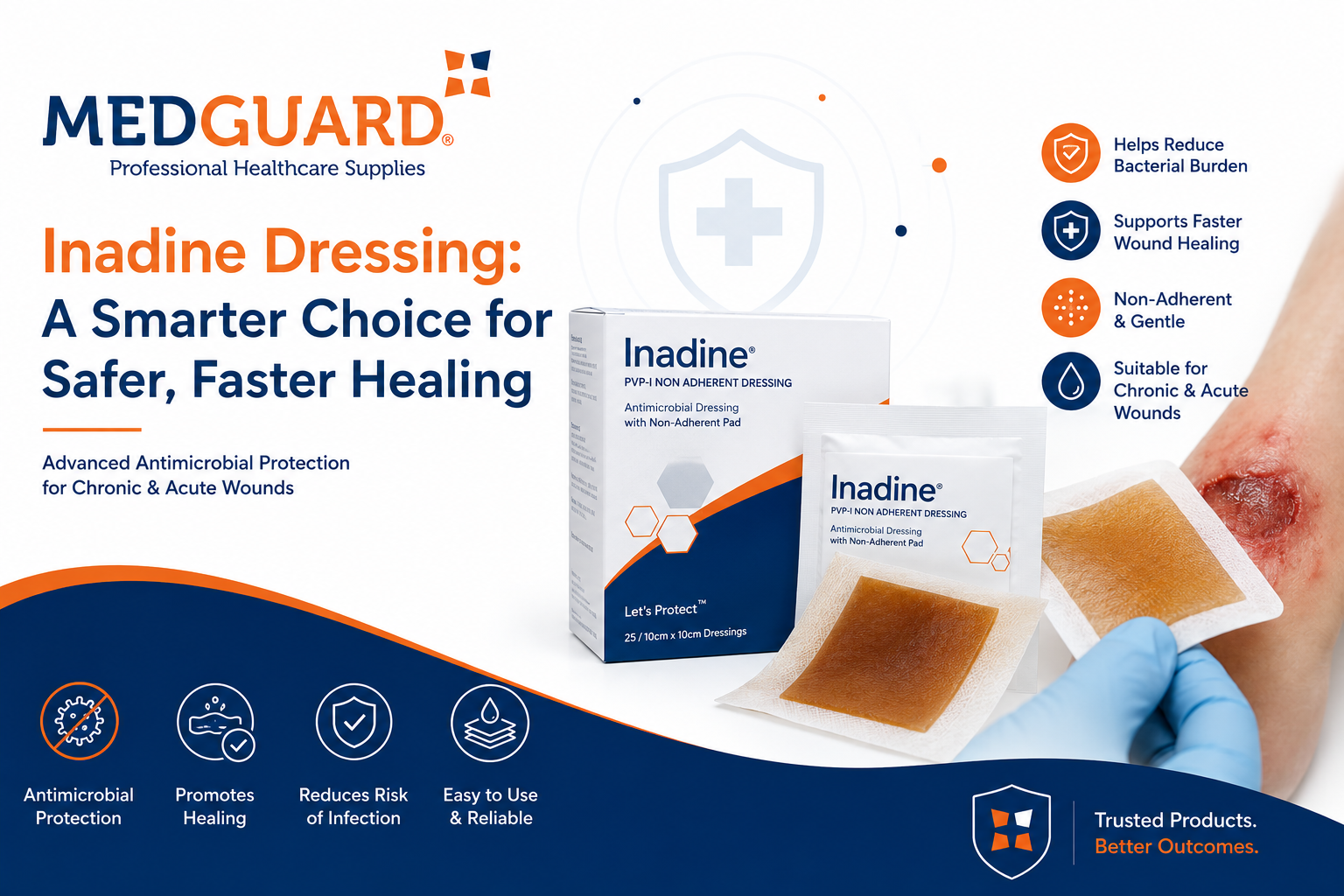
Effective wound care requires healthcare professionals to balance multiple priorities, including infection control, patient comfort, healing support, and efficient clinical management. With a wide range of wound dressings available today, selecting the most appropriate product can significantly influence treatment outcomes. As wound care practices continue to evolve, clinicians often rely on products that have demonstrated consistent performance across different care settings and wound types.
Among the many options available, Inadine Dressing continues to be a trusted choice for healthcare providers worldwide. Its antimicrobial properties, ease of use, and versatility have made it a valuable component of modern wound management strategies. As a trusted supplier of medical products and healthcare solutions, Medguard Healthcare recognizes the importance of providing wound care products that help clinicians deliver safe, effective, and patient-centered care.
The Importance of Choosing the Right Wound Dressing
Every wound presents unique challenges. Factors such as wound size, location, infection risk, exudate levels, and underlying patient conditions all influence treatment decisions.
Healthcare professionals must choose dressings that not only protect the wound but also support the healing process. A suitable dressing can help maintain a favorable wound environment, reduce complications, and improve patient comfort throughout treatment.
The continued use of Inadine Dressing reflects its ability to address many of these clinical priorities while fitting into a wide range of wound care protocols.
What Is Inadine Dressing?
Inadine Dressing is a non-adherent wound dressing that contains povidone-iodine, a broad-spectrum antimicrobial agent. When exposed to wound exudate, the dressing gradually releases iodine into the wound bed.
This controlled release helps reduce microbial activity while maintaining protection over the wound surface. Unlike some conventional dressings that may stick to healing tissue, Inadine Dressing is designed to minimize trauma during removal.
Its combination of antimicrobial support and patient-friendly design has contributed to its long-standing role in wound care.
Trusted for Effective Infection Management
One of the primary reasons healthcare professionals continue to use Inadine Dressing is its role in infection management.
Bacterial contamination can interfere with normal healing processes and increase the risk of complications. By releasing iodine gradually, Inadine Dressing helps reduce bacterial burden and supports a cleaner wound environment.
This antimicrobial action is particularly valuable for wounds that are vulnerable to infection or showing signs of increased microbial activity. By helping manage bacterial levels, the dressing supports broader infection prevention and wound care strategies.
Suitable for a Wide Range of Wounds
Versatility is another factor that contributes to the popularity of Inadine Dressing among healthcare providers.
The dressing may be considered for:
- Surgical wounds
- Minor burns
- Traumatic injuries
- Pressure ulcers
- Venous leg ulcers
- Diabetic foot ulcers
- Abrasions and lacerations
- Superficial wounds at risk of infection
Because it can be used across multiple wound categories, clinicians often view it as a practical option within comprehensive wound management programs.
Supports Patient Comfort During Treatment
Patient comfort plays an important role in successful wound care. Frequent dressing changes can be stressful, especially if the dressing adheres to delicate healing tissue.
Inadine Dressing features a non-adherent design that helps reduce sticking to the wound surface. This minimizes trauma during removal and helps preserve newly formed tissue.
Less painful dressing changes can improve the overall patient experience and encourage adherence to treatment plans, particularly for individuals requiring ongoing wound management.
Easy to Incorporate Into Clinical Practice
Healthcare providers often prefer wound care products that are straightforward to use and integrate easily into existing protocols.
Inadine Dressing offers a simple application process and can be used across a variety of healthcare environments, including hospitals, outpatient clinics, community healthcare services, and long-term care facilities.
Its ease of use allows clinicians to focus on broader treatment goals while maintaining effective wound management practices.
Supports Ongoing Wound Monitoring
Regular wound assessment is essential for evaluating healing progress and determining whether treatment adjustments are needed.
One practical feature of Inadine Dressing is its visual color-change indicator. As iodine is released from the dressing, its color gradually fades, providing healthcare professionals with a useful indication that the dressing may require replacement.
This feature supports efficient clinical decision-making and helps ensure that antimicrobial protection remains effective.
Aligns with Modern Wound Care Principles
Contemporary wound care emphasizes creating an environment that supports natural healing while minimizing complications. Infection control, tissue preservation, moisture balance, and patient-centered care are all important aspects of modern treatment strategies.
Inadine Dressing aligns with these principles by:
- Helping manage bacterial burden
- Protecting vulnerable wounds
- Reducing trauma during dressing changes
- Supporting patient comfort
- Providing practical monitoring benefits
These characteristics make it a valuable tool for clinicians seeking evidence-based wound care solutions.
Benefits Across Different Healthcare Settings
The flexibility of Inadine Dressing allows it to be used in various clinical environments.
Healthcare professionals may incorporate it into treatment plans in:
- Acute care hospitals
- Surgical units
- Community nursing services
- Specialist wound care clinics
- Long-term care facilities
- Home healthcare programs
This broad applicability contributes to its reputation as a dependable and adaptable wound care product.
The Value of a Comprehensive Wound Care Approach
While Inadine Dressing offers significant benefits, successful wound management depends on a comprehensive treatment strategy. Healthcare professionals must combine appropriate dressing selection with regular assessment, wound cleansing, moisture management, and patient education.
When used as part of a structured care plan, antimicrobial dressings can help support healing while reducing the likelihood of infection-related complications.
Conclusion
Healthcare providers continue to trust Inadine Dressing because it addresses many of the challenges associated with modern wound care. Its controlled release of povidone-iodine helps manage bacterial burden, while its non-adherent design supports patient comfort and protects healing tissue.
Combined with its versatility, ease of use, and practical monitoring features, Inadine Dressing remains a valuable option for clinicians managing a wide variety of wounds. As wound care continues to advance, it continues to serve as a reliable solution that supports effective treatment strategies and positive patient outcomes.
Original Source : https://proaiarticles.com/the-science-behind-inadine-dressings-do-they-really-work-faster/