
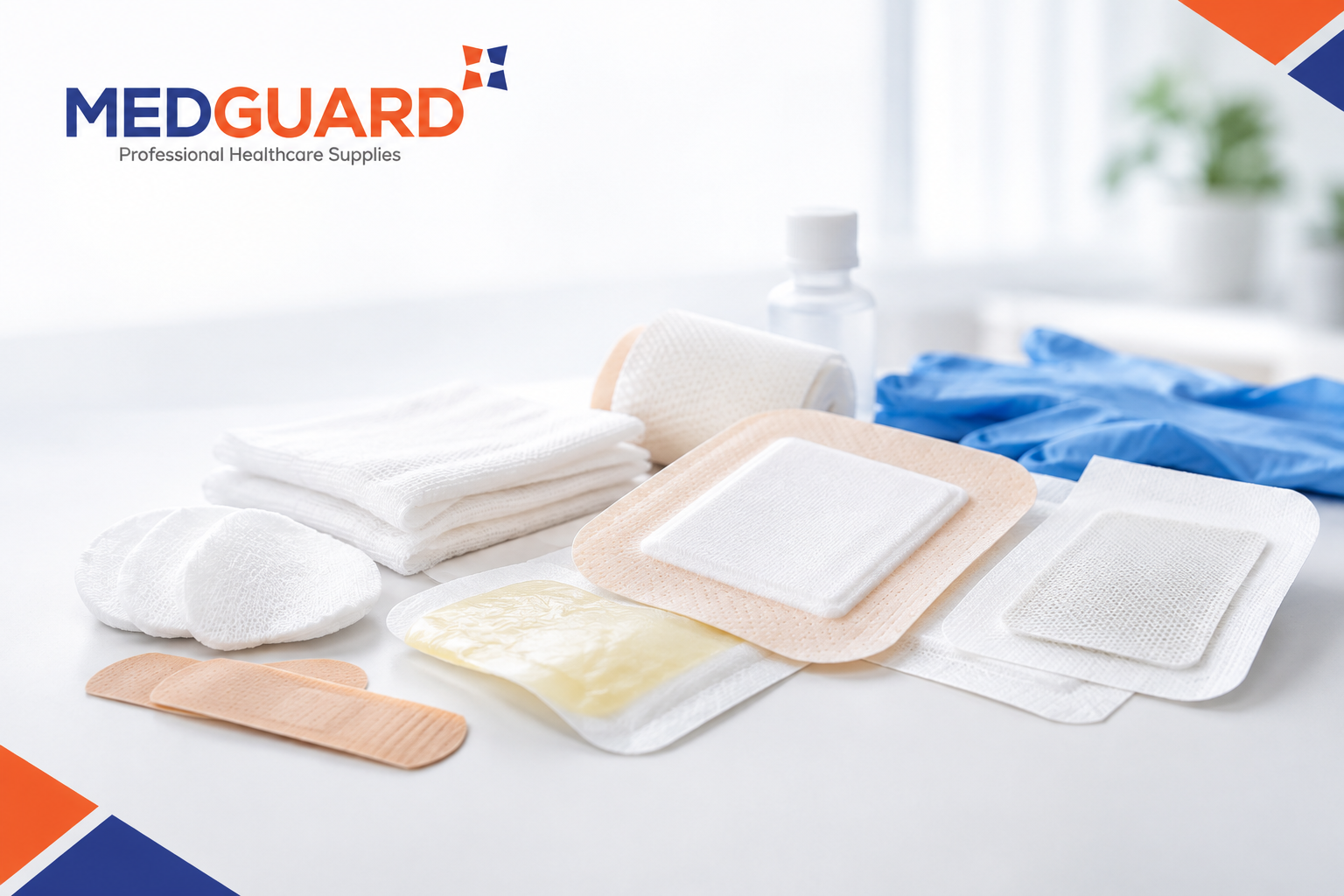
Choosing a wound dressing depends on what the wound needs at a particular stage of healing. While some dressings are mainly used to protect a wound or absorb exudate, others have additional properties designed for specific wound-care situations. An Inadine dressing is one example of a non-adherent antimicrobial dressing used in wound management.
Understanding what Inadine is, when it may be appropriate and what factors should be considered before using it can help healthcare professionals and carers make more informed dressing choices.
What Is an Inadine Dressing?
Inadine is a non-adherent antimicrobial dressing containing povidone-iodine. It is designed to provide a protective wound-contact layer while releasing iodine at the wound surface.
The non-adherent construction is intended to reduce sticking to the wound, which can make dressing changes more comfortable and help minimise disturbance to the wound bed.
Like other specialist dressings, Inadine is not intended to be used for every type of wound. Its suitability depends on the wound, the individual's circumstances and the intended purpose of treatment.
Why Is the Non-Adherent Property Useful?
One of the practical features of Inadine is its non-adherent design.
Wounds can contain delicate tissue that may be disturbed when a dressing sticks firmly to the wound surface. Reducing this attachment can make dressing removal easier and may help limit unnecessary trauma during routine wound care.
This can be particularly useful where regular dressing changes are required or where protecting the wound surface is an important consideration.
However, the non-adherent property should be considered separately from the antimicrobial function. Not every wound that needs a non-adherent dressing necessarily requires an antimicrobial dressing.
When May Inadine Be Used?
Inadine may be considered in wound-care situations where an antimicrobial dressing is appropriate and where a non-adherent contact layer is also beneficial.
Its use may be relevant for selected wounds where there is a clinical reason to manage microbial contamination. The decision should be based on wound assessment rather than simply choosing an antimicrobial dressing because it is available.
Healthcare professionals may consider factors such as the wound's condition, amount of exudate, surrounding skin and overall treatment plan.
The product should always be used according to its instructions and appropriate clinical guidance.
How Does Exudate Affect the Choice?
The amount of wound exudate is an important consideration when selecting any dressing, including Inadine.
A wound producing a significant amount of fluid may require additional absorbency. A non-adherent antimicrobial contact layer may therefore need to be used with an appropriate secondary dressing to manage the exudate effectively.
This is important because Inadine should not be selected simply on the basis that a wound is producing fluid. The level of exudate and the wound's wider requirements should both be considered.
Understanding why wound exudate matters when choosing a dressing can help explain why different layers or dressing types may be required depending on the wound.
What Types of Wounds May Require an Antimicrobial Dressing?
Antimicrobial dressings have specific roles within wound care and should not be treated as a universal solution.
The decision to use an antimicrobial dressing can depend on the wound assessment and whether there is a recognised clinical reason for antimicrobial management. Other aspects of care, such as wound cleansing, management of underlying conditions and appropriate dressing changes, remain important.
A healthcare professional may therefore choose Inadine where its particular properties fit the needs of the wound, rather than simply because it is an antimicrobial product.
What About Sensitive Skin or Fragile Wounds?
The surrounding skin should always be considered when selecting a dressing.
Fragile skin can be more vulnerable to irritation and mechanical damage during dressing changes. The non-adherent nature of Inadine can be beneficial where reducing sticking is important, but individual suitability still needs to be assessed.
The product should also be used according to its intended application, and any concerns about irritation or sensitivity should be discussed with an appropriate healthcare professional.
How Is Inadine Different From a Standard Dressing?
A standard protective dressing may simply cover the wound and provide basic protection. Inadine has additional antimicrobial properties and a non-adherent wound-contact design.
This means it should be selected for a specific purpose rather than viewed as an upgraded version of an ordinary dressing.
Other wound-care products may be more suitable where the main requirement is absorption, cushioning or moisture management. The right option depends on the wound and what the dressing is expected to achieve.
How Does Inadine Fit Into a Dressing Plan?
Inadine may form one part of a wider dressing approach.
Depending on the wound, a secondary dressing may be needed to manage exudate and keep the wound appropriately protected. The choice of secondary dressing should take account of how much fluid the wound is producing.
Dressing changes should also follow the product instructions and the requirements of the wound.
As the wound changes, the continued need for a particular antimicrobial dressing should be reviewed. A product that is appropriate at one stage may not necessarily be required throughout the entire healing process.
Is Inadine Suitable for First Aid?
Not every minor injury requires an antimicrobial dressing. For everyday cuts and grazes that are suitable for basic home management, standard wound-care products may be sufficient.
A first aid dressing kit can provide useful supplies for dealing with minor injuries at home or in the workplace.
Inadine is a more specific product and should be used for appropriate wound-care situations rather than automatically included as the first choice for every minor injury.
For wounds that are deep, deteriorating, infected or not healing as expected, professional medical assessment is important.
Choosing Inadine Dressing in Ireland
For healthcare professionals and carers in Ireland, having access to different wound-care products can make it easier to select a dressing according to the needs of an individual wound.
Medguard Healthcare supplies a range of medical and wound-care products for healthcare settings, carers and home-care users across Ireland, including Inadine dressings.
The key consideration is always suitability. Inadine can provide the combination of a non-adherent wound contact layer and antimicrobial properties, but it should be selected according to the wound, the amount of exudate and the overall treatment plan.
As with other dressings, wound requirements can change over time. Regular assessment helps ensure that the selected product continues to be appropriate as the wound progresses through healing.
Original Source : https://www.mednuc.net/why-does-wound-exudate-matter-when-choosing-a-dressing/