
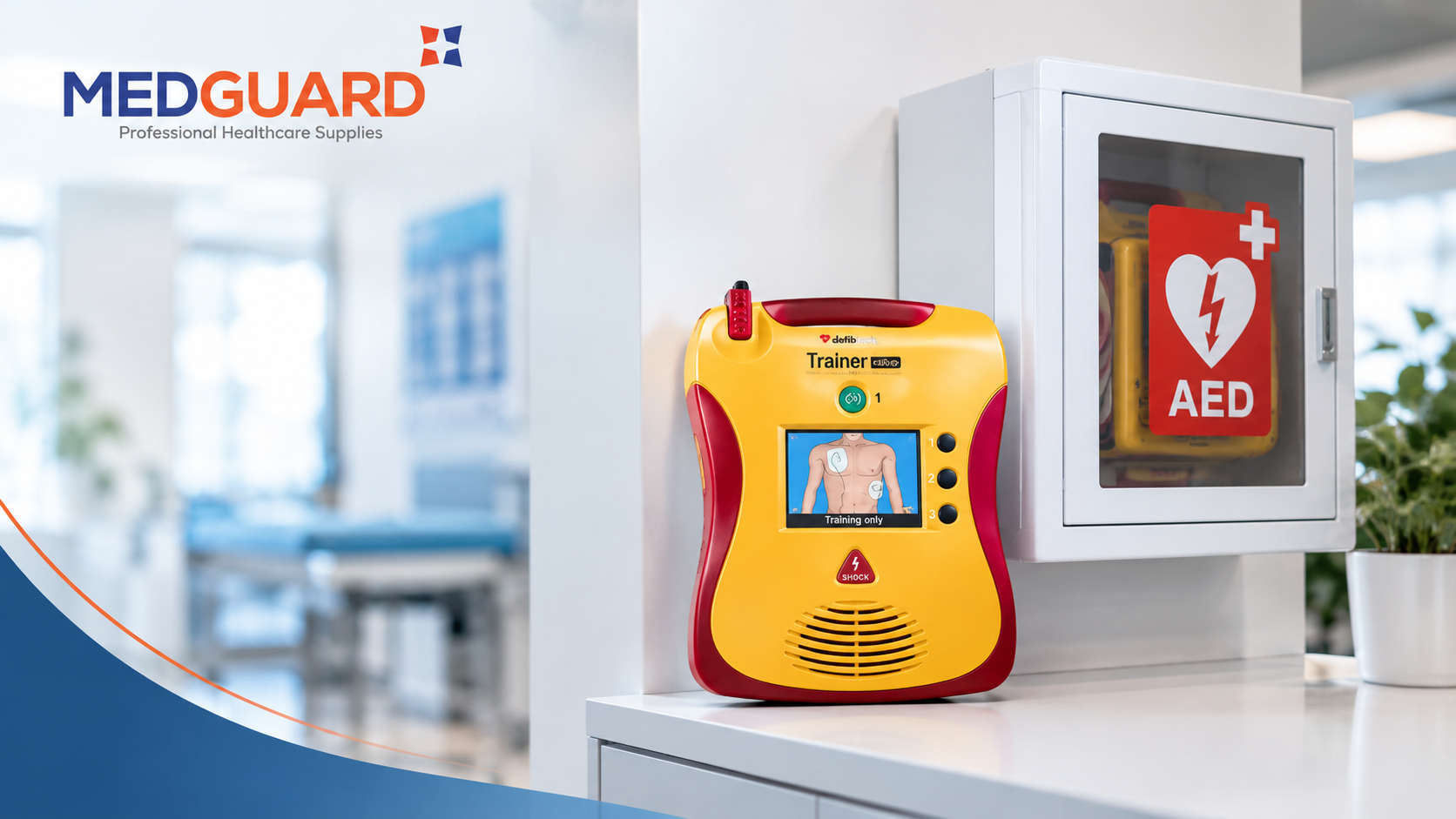
Having defibrillators in a workplace is only one part of being prepared for a cardiac emergency. Staff also need to know where the device is, how to retrieve it and what to do when someone suddenly collapses.
The good news is that AEDs are designed to guide the user through the process. The HSE states that an automated external defibrillator can be used without medical training when responding to a cardiac emergency. However, appropriate training and regular awareness can give employees greater confidence when faced with a stressful situation.
Make Everyone Aware of the AED
The first step is surprisingly simple: make sure employees know that an AED is available.
Staff should know:
- Where the AED is located
- How to access it
- Who is responsible for checking it
- Where emergency contact information is displayed
- How to alert emergency services
- What to do while the AED is being retrieved
This information can be included in staff induction, workplace safety information and emergency procedures.
An employee who knows exactly where the AED is can retrieve it much faster than someone who has to search for it during an emergency.
Consider Appropriate AED Training
Although an AED can provide spoken or visual instructions during use, practical training can help employees become familiar with the equipment before an actual emergency occurs.
PHECC's Cardiac First Response Community course includes basic life support and AED use for people responding to someone who has suddenly collapsed. Its training standard includes recognising when an AED should be used, understanding its operation and applying it with minimal delay and interruption to CPR.
For workplaces, having appropriately trained first-aid or cardiac first responders can form part of a broader emergency preparedness plan.
Training Should Include More Than Pressing a Button
AED preparation should not focus solely on operating the device.
Staff should understand the wider emergency response, including recognising when someone may be experiencing cardiac arrest, raising the alarm, contacting emergency services, starting CPR where appropriate and getting the AED as quickly as possible.
The HSE advises calling 999 or 112 in an emergency and using an AED if one is available.
This means employees should understand how the AED fits into the overall response rather than treating it as a standalone piece of equipment.
Practise Retrieving the AED
An AED is of limited practical value if employees know it exists but cannot find it quickly.
During workplace training or emergency exercises, staff can become familiar with:
- The AED's exact location
- The route to the device
- How its cabinet or storage system works
- Where additional emergency equipment is kept
- Who should bring the AED to the casualty
This is particularly important in large offices, warehouses, healthcare facilities and buildings with multiple floors.
If the workplace operates different shifts, awareness should not be limited to daytime employees. Staff working evenings, nights or weekends should also understand the access arrangements.
Make AED Instructions Easy to Follow
The AED should be stored where its instructions and status indicators can be seen easily when the device is retrieved.
Staff should become familiar with the fact that the AED will provide instructions during use. They should follow the device's prompts and avoid unnecessarily delaying its application.
Training can also help employees understand basic safety precautions and become comfortable with the sequence of using an AED.
This familiarity matters because people may hesitate when confronted with unfamiliar equipment during a stressful situation.
Keep Training Current
AED skills should not be treated as something employees learn once and never revisit.
Refresher training can help staff maintain confidence, particularly where employees rarely encounter emergency situations. The HSE, for example, notes that occupational first-aid certification requires refresher training every two years, while its nursing resources recommend BLS training every two years and include AED use within the programme.
Organisations should follow the requirements and recommendations applicable to their workplace and chosen training programme.
Check the Equipment Alongside Staff Readiness
Training is only one part of AED preparedness.
The device itself should remain accessible and maintained according to the manufacturer's instructions. Employees responsible for workplace equipment should also know how to identify obvious issues and report faults.
HSE guidance on work equipment highlights the importance of employee training, pre-use checks and reporting defective equipment.
For AEDs, this can include checking the visible status indicator, confirming that the device remains in its designated location and ensuring that electrode pads and batteries have not expired.
Build AED Awareness Into the Workplace
A strong AED plan does not need to be complicated. The key is making emergency response familiar rather than leaving employees to work everything out during a crisis.
For organisations sourcing Medical supplies In ireland, staff preparation should be considered alongside purchasing defibrillators. The equipment, storage arrangements, maintenance process, signage and training should all work together.
Medguard Healthcare can support organisations reviewing their medical and emergency equipment requirements. Ultimately, the goal is to ensure that employees are not only aware that an AED exists, but are prepared to find it, retrieve it and follow the appropriate emergency response when it matters most.
Original Source : https://mydailyactivities.com/business/why-does-aed-accessibility-matter-as-much-as-having-a-defibrillator