
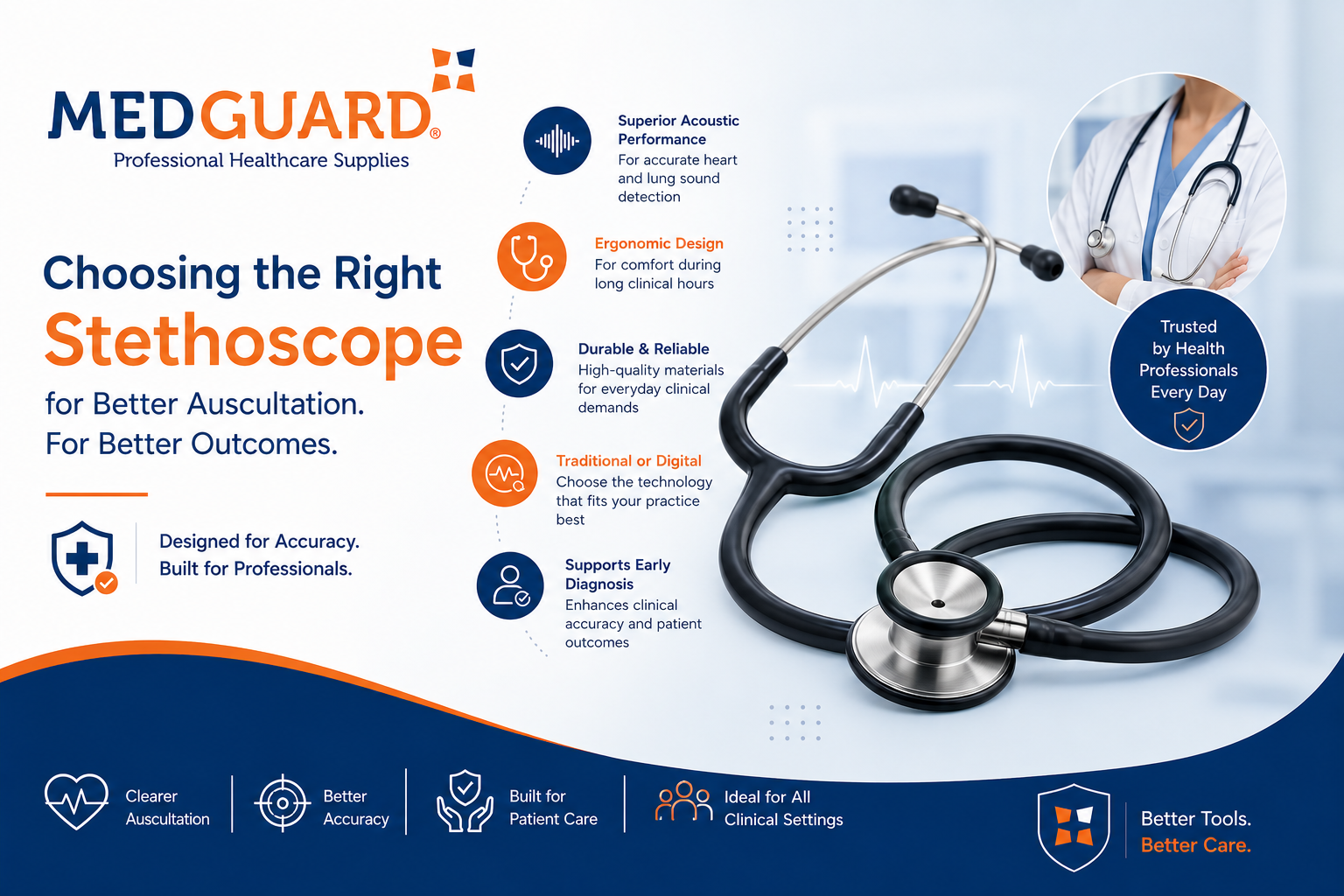
Early disease detection plays a critical role in improving patient outcomes, enabling timely intervention, and supporting more effective treatment plans. In primary care, community healthcare, and hospital settings, healthcare professionals often rely on auscultation as one of the first steps in patient assessment. While the stethoscope has been a trusted diagnostic tool for generations, modern innovations have significantly enhanced its capabilities. Advanced stethoscope technology is helping clinicians detect subtle physiological changes earlier, supporting more informed clinical decisions and proactive patient care.
The Importance of Early Detection in Healthcare
Many cardiovascular and respiratory conditions develop gradually and may initially present with subtle signs and symptoms. Identifying these early indicators can allow healthcare professionals to recommend further investigations, initiate treatment sooner, and potentially reduce the risk of complications.
Conditions that may benefit from early recognition include:
- Heart valve abnormalities
- Cardiac arrhythmias
- Congestive heart failure
- Chronic respiratory diseases
- Pneumonia
- Asthma and other airway disorders
Auscultation remains an important component of the initial assessment process, making the quality and capability of diagnostic equipment increasingly valuable.
How Stethoscope Technology Has Evolved
Traditional acoustic stethoscopes continue to provide reliable performance for routine examinations. However, advances in medical technology have introduced new features designed to enhance sound clarity, improve workflow efficiency, and support more detailed patient evaluations.
Modern stethoscope innovations include:
- Enhanced acoustic sensitivity
- Tunable diaphragm technology
- Improved noise isolation
- Digital sound amplification
- Audio recording functionality
- Wireless connectivity
- Telemedicine integration
These developments help clinicians capture and analyse physiological sounds more effectively than ever before.
Enhanced Acoustic Performance
One of the most significant advancements in stethoscope design is improved acoustic performance. Modern instruments are engineered to capture a broader range of frequencies while reducing sound distortion.
Enhanced acoustic sensitivity can assist clinicians in detecting:
- Faint heart murmurs
- Extra heart sounds
- Crackles and wheezes
- Reduced breath sounds
- Vascular abnormalities
Clearer sound transmission allows healthcare professionals to evaluate subtle findings with greater confidence during routine examinations.
Digital Amplification and Noise Reduction
Digital stethoscopes have introduced features that can be particularly useful in busy healthcare environments. Electronic amplification can increase the volume of physiological sounds, while advanced noise reduction technology helps minimise interference from surrounding activity.
These capabilities may be beneficial when assessing patients with difficult-to-hear clinical findings or when working in settings where ambient noise could affect auscultation quality.
Supporting Clinical Collaboration
Many digital stethoscopes allow sounds to be recorded, stored, and shared securely. This functionality supports collaboration between healthcare professionals and can be valuable for:
- Specialist consultations
- Clinical education
- Case discussions
- Remote assessments
The ability to review recorded sounds may also help clinicians compare findings over time and monitor disease progression more effectively.
Telemedicine and Remote Healthcare
The growth of telehealth services has increased demand for diagnostic tools that support remote patient care. Advanced stethoscope technology can integrate with digital platforms, enabling healthcare professionals to assess and share auscultation findings without requiring face-to-face specialist consultations.
As healthcare systems continue to adopt digital solutions, connected diagnostic devices are becoming increasingly important in supporting accessible and efficient patient care.
Improving Confidence in Patient Assessment
While technology does not replace clinical expertise, it can provide healthcare professionals with clearer information during examinations. Enhanced sound quality and advanced diagnostic features can help strengthen confidence when evaluating patients and determining appropriate next steps.
Early recognition of abnormal findings often begins with careful listening. Modern stethoscope technology supports this process by making subtle physiological sounds easier to detect and interpret.
A Trusted Tool for Everyday Clinical Practice
The 3M Littmann Classic III remains a popular choice among healthcare professionals due to its dependable acoustic performance, durable construction, and versatility. Its design supports accurate auscultation across a wide range of patient assessments, making it a valuable instrument in everyday clinical practice.
Accessing Quality Diagnostic Solutions
Healthcare professionals seeking reliable diagnostic equipment can explore a broad range of products through Medguard Healthcare, helping ensure access to solutions that support effective patient assessment and modern healthcare delivery.
Conclusion
Advanced stethoscope technology is enhancing the way healthcare professionals assess patients and identify potential health concerns. Through improved acoustic performance, digital amplification, noise reduction, and connectivity features, modern stethoscopes can support earlier recognition of cardiovascular and respiratory abnormalities. While clinical skill remains the foundation of effective diagnosis, innovative diagnostic tools continue to play an important role in supporting early disease detection and improving patient care outcomes.
Original Source : https://webrankedsolutions.com/wellness/clinical-accuracy-considerations-in-stethoscope-selection-for-primary-care/