
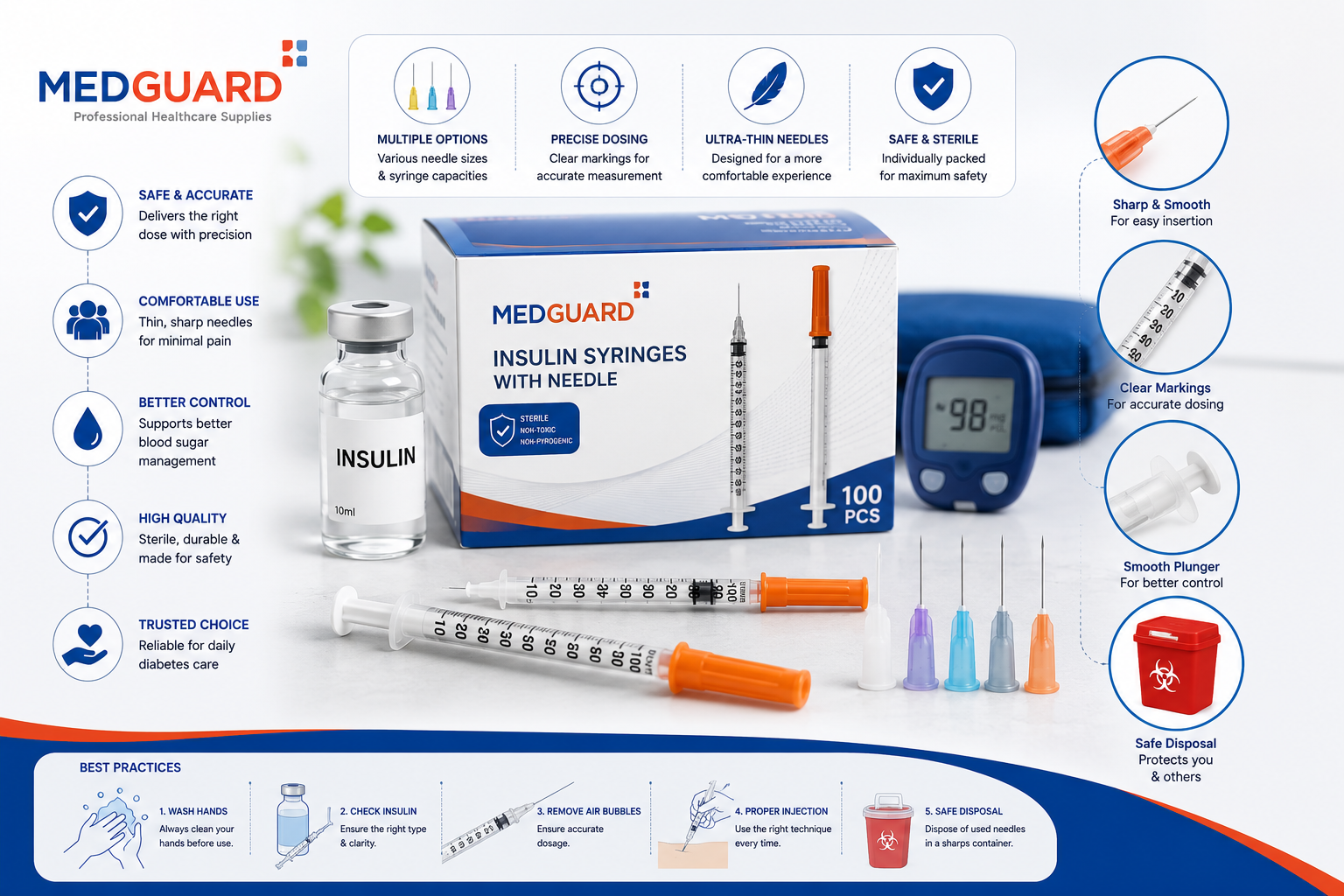
Managing diabetes with insulin therapy involves more than taking the correct dose. Safe handling and proper disposal of insulin needles and syringes are equally important for protecting personal health, preventing infections, and ensuring a safe environment for family members and caregivers. Following the right practices not only improves the effectiveness of insulin therapy but also reduces the risk of accidental injuries and contamination.
Developing good habits from the beginning makes insulin administration easier and safer over time. Using high-quality products from trusted providers such as Medguard Healthcare further supports accurate insulin delivery while maintaining high standards of safety and reliability.
Why Safe Handling Is Important
Every insulin injection involves direct contact with medical equipment that must remain sterile until use. Improper handling can introduce bacteria, increase the risk of infection, or affect the accuracy of insulin administration.
Safe handling practices help:
- Maintain the sterility of injection supplies.
- Reduce the risk of infections.
- Improve dosing accuracy.
- Protect caregivers and family members.
- Support better long-term diabetes management.
By following simple precautions, individuals can perform insulin injections with greater confidence and peace of mind.
Wash Your Hands Before Every Injection
Hand hygiene is one of the simplest yet most effective ways to reduce the risk of contamination. Before preparing insulin, wash your hands thoroughly with soap and clean water, then dry them completely.
Clean hands help prevent germs from coming into contact with the syringe, needle, or insulin vial. This small step plays an important role in maintaining a safe injection routine.
Store Supplies Properly
Proper storage helps preserve the quality of both insulin and injection equipment.
Keep your supplies in a clean, dry location away from direct sunlight and excessive heat. Avoid storing needles and syringes in areas where they may become damaged or contaminated.
Always follow the storage instructions provided with your insulin and use products before their expiry dates. Reliable products from Medguard Healthcare are designed to maintain their quality when stored according to the recommended guidelines.
Always Use a New Needle
Disposable needles are intended for one-time use only. Reusing them may seem convenient, but it can lead to several problems.
Repeated use may result in:
- Dull needle tips.
- Increased injection discomfort.
- Higher risk of infection.
- Skin irritation.
- Reduced injection quality.
Using a fresh sterile needle for every injection helps ensure a safer and more comfortable experience while supporting accurate insulin administration.
Avoid Touching the Needle
Once the protective cap is removed, avoid touching the needle with your fingers or allowing it to come into contact with other surfaces.
Keeping the needle sterile helps reduce contamination and protects against infection. If the needle accidentally touches an unclean surface, replace it with a new one before administering insulin.
Rotate Injection Sites
Although site rotation is commonly associated with insulin absorption, it also supports healthier skin and safer long-term injections.
Frequently rotating between recommended injection areas helps reduce the likelihood of:
- Skin thickening.
- Bruising.
- Swelling.
- Tissue damage.
- Reduced insulin absorption.
Healthy skin contributes to more consistent insulin delivery and improves overall comfort during daily therapy.
Dispose of Needles Safely
Proper disposal is one of the most important responsibilities for anyone using insulin injections. Used needles remain sharp and may cause accidental injuries if discarded improperly.
After every injection:
- Place the used needle and syringe directly into an approved sharps container.
- Never recap a used needle unless specifically instructed by a healthcare professional.
- Keep sharps containers out of reach of children and pets.
- Replace the container when it becomes full according to local disposal recommendations.
Safe disposal protects everyone who may come into contact with household waste.
Never Throw Loose Needles in Household Trash
Placing used needles directly into regular garbage bins creates unnecessary risks for sanitation workers, caregivers, and other household members.
Many communities have designated collection programs or approved disposal facilities for medical sharps. Following local guidelines helps prevent accidental needle-stick injuries and supports responsible waste management.
Keep Supplies Away from Children
Insulin injection supplies should always be stored securely. Children may not understand the dangers associated with medical sharps and could accidentally injure themselves.
Store unused needles, syringes, insulin, and sharps containers in a secure location that is difficult for children to access. Safe storage provides additional protection for everyone in the home.
Choose Quality Medical Products
Reliable medical supplies make safe insulin administration much easier. High-quality products are manufactured with precision, sterile packaging, and clear dosage markings to support consistent performance.
Medguard Healthcare is committed to providing dependable healthcare products that meet high standards of quality and safety. Choosing trusted injection supplies helps individuals manage diabetes with greater confidence while reducing the risk of avoidable complications.
Make Safety Part of Your Daily Routine
Safe handling and disposal should become part of every insulin injection rather than an occasional reminder. Establishing a consistent routine helps reduce mistakes and promotes long-term success with insulin therapy.
Simple habits such as washing hands, checking supplies, using a new needle, rotating injection sites, and disposing of used equipment properly can make a meaningful difference in overall diabetes care.
As these habits become routine, insulin administration becomes safer, more efficient, and less stressful.
Conclusion
Safe handling and proper disposal of insulin injection equipment are essential components of effective diabetes management. Following recommended hygiene practices, using sterile supplies, rotating injection sites, and disposing of used needles responsibly all contribute to safer insulin therapy and better health outcomes.
With dependable products from Medguard Healthcare and a commitment to safe daily practices, individuals can perform insulin injections confidently while protecting themselves and those around them. Consistent attention to safety supports accurate insulin delivery, reduces unnecessary risks, and helps create a healthier approach to long-term diabetes care.
Original Source : https://zoobynews.com/insulin-needles-syringes-supporting-diabetes-management/